Thursday, November 18, 2010

Seriously, How Do You Do It?

My apologies for the missing blog last week. I was in Albuquerque with colleagues from other states. We spent time learning how things are working throughout the nation. I maintain TSTA is doing pretty well.

Also information of note: Davis Guggenheim ("Waiting for Superman") will not be making a documentary of Lindsay Lohan. He doesn't feel it's worth his time.

Speaking of time, and what merits my time...

My wife was a single parent last week, and she will be one again at the end of the month.

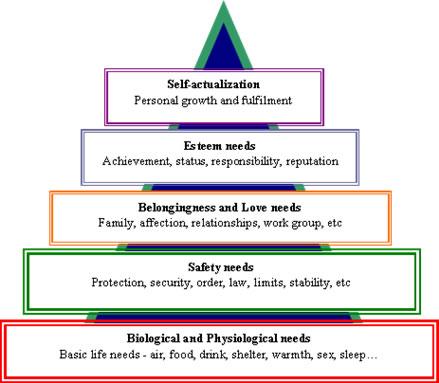
If you look down on this blog, you’ll see a triangle-shaped graph. It illustrates how important home life is to a student, how important home life is to student learning.

A family friend has breast cancer. She lives alone, and she needs people to help her after each round of chemotherapy. We decided to take a turn. My wife boarded a plane to Minneapolis on Tuesday. She will return on Sunday.

That makes me a single parent.

It started out well enough. I made hamburgers. Then I realized I was out of fries and there were no baked beans in the pantry. Quick trip to HEB (had to do that last night, too).  I think it's tacos tonight, barring a long State Board of Education meeting.

Cook the food. Eat the food. Now time for homework. Deep breath and read fast.

Oldest needs to write flashcards for spelling words. I have a PhD, and I didn’t know some of them. Fifty words! Test tomorrow. Wow. My son had math homework. I checked it and we discussed his errors. We corrected them, and he got to play on my iPhone. My youngest daughter had spelling, as well. We worked through the 25 words, and she wrote the ones she missed three times each. We will retest tonight, and I imagine she will write a few of the same words. We also have to create a diorama by Monday. Not sure what to use to construct a Lipan Apache teepee. Spaghetti is too weak, but pencils are too large. I guess the buffalo (North American Bison) hide will be a paper sack that has been crunched up. We talked but came to no decision. The two younger kids are required to read for 20 minutes a day and practice musical instruments for another 20 minutes. The parent needs to monitor this, as well. What will I be providing for the 4th grade Thanksgiving feast? Will I be attending? We need to sell at least 20 boxes of Girl Scout cookies, I guess. Need to get a present for Friday's birthday party...and Saturday's quincinera.

What time is it, now?

Bed time. Kids need to be at elementary school by 7:15 a.m. One catches the bus at the elementary school to middle school. I have to drive my daughter to high school. 

It’s enough to make a couple stay married. I have always marveled at single-parent families, but I HATE IT when I have to experience the situation.

There are 13 million single-parent household parents. Thirteen million families. Thirteen million sets of children just like mine.

Fix that, Superman.

Friday, November 5, 2010

Self-Proclaimed Experts

Every day, I open my mailbox to about a dozen news briefs from various groups. I was excited when I read a headline from the Association for the Supervision of Curriculum Development's daily Smart Brief: “How Standardized Tests Can Be Made More Meaningful.”

http://www.sfgate.com/cgi-bin/article.cgi?f=/c/a/2010/10/30/INFT1G2IAQ.DTL#ixzz143upzOZU

Unfortunately, not helpful. At all.

As usual, it was a ridiculous article written by a SPE (Self-Proclaimed Expert).

One of the problems with non-educators—and those who teach for two years, quit, and declare themselves experts—is that they have simplistic answers to complex questions. Here are this woman’s answers:

Are you concerned that because many tests cover only math and reading, schools will pay too little attention to science and history? Then let's make schools accountable for their science and history test scores rather than just math and reading Are you worried that teachers are focusing on test-taking strategies instead of the concrete math and reading skills that students will need in the real world? Then ask rigorous questions that reflect the kinds of skills that allow students to succeed on their paths to becoming doctors, construction workers or computer scientists.


You’ve got to be kidding me…the answer to too much testing is…more tests.


Science Tests (High Stakes)

Social Studies Tests (High Stakes)

Smaller Tests (High Stakes)

Testing More Often (High Stakes)

Harder Tests (High Stakes)

Teacher Evaluations Based on These (High Stakes)

Of course, nobody wins here. We just find more ways to close schools. HUNDREDS more ways. We ask much harder questions in a whole bunch of different subjects. When kids don’t get them right, we close the school and fire the teachers.

Oh, by the way. Here’s the author’s bio:
Miki Litmanovitz was a member of the Teach for America program, in which she taught middle-school math at a low-income school in San Jose. She is completing master's degrees at Harvard Business School and the Harvard Kennedy School of Government, where she is a Zuckerman Fellow through the Center for Public Leadership.

Hey, she doesn’t have to live with it. She quit. Perhaps she’ll write a book now. Or film a documentary.

 It’s just like they say: the further you are from a problem, the more expertise you think you have.

Friday, October 22, 2010

An Invitation

Today’s blog is about the Teaching and Learning page on www.tsta.org. You can find it in the middle of the blue bar at the top of the page or just hit the link at the end of this post. There are some great resources that have just been added, and it seems like we should take every opportunity to let you know what is there. Here are some very recent examples of new and helpful items.

1. There is a new document from TEA that’s designed to help teachers understand the new STAAR tests. The document came today, and it’s already posted.

2. There is a set of forms that work well for conducting a Manifestation Determination and a Behavioral Intervention Plan for students with special needs.

3. You can find a document called, “College Advising 101 Worksheet.” It gives high school students important questions related to financial planning, academic preparedness, and life on campus. This is a nice document if you teach in a high school.

Check back often to this page. In fact, you may want to bookmark the page. TSTA is here to help. That includes the things you do in the classroom.

http://www.tsta.org/teaching/current/index.shtml

Wednesday, October 13, 2010

Charter Schools and the One “Superman”

Many self-appointed experts use charter schools as justification to eliminate tenure, teachers’ unions, and salary schedules. One of the most famous of all charters is called, The Harlem Children’s Zone. The idea is a noble one: Geoffrey Canada started with one square block in Harlem and transformed the education in that area with a charter school. The HCZ now encompasses 97 square blocks in Harlem. This success is based on high-stakes test scores. It gets A LOT worse. The board of HCZ had Canada throw out the entire first class--the high-stakes test scores were not high enough. Talk about high stakes!

 But new graduates of the HCZ are showing promise in the outer world. That’s the real test, isn’t it?

I think Mr. Canada’s current model is one to follow. He focuses on the whole child. Students receive medical care, a safe environment, a suddenly safer neighborhood, parents who have become involved, an 11-month school year, and extended school days. The cost of all of this? About $16,000 per year. That includes bonuses for students, who perform well on multiple measures. It also reflects the costs of longer schooling, and other factors. It does not include the costs for out-of-school things.

See last week’s posting for some perspective.

It’s amazing what happens when you see a child as human and not numeric. Geoffrey Canada’s ideas wouldn’t float here, though.

Today, we find that Texas is one of the very worst states when it comes to financial equity in schools.

The Education Law Center just released a report stating what most of us already knew: rich kids get better schools than poor kids, and Texas is awful on this measure.

This shows something else we already know: it takes money to teach children the right way.

Geoffrey Canada is a superhero because he is not afraid to spend money on kids. It’s too bad this governor and this legislature are more villains than superheroes.

You don’t have to put up with this, though.

Vote.

Thursday, October 7, 2010

Open Memorandum to the State Board for Educator Certification

To:       Bonny L. Cain, Ed D., Board Chair

            Christie Pogue, Board Vice Chair

            Janie Baszile, Board Secretary

            Brad W. Allard

            Sandra Bridges

            Jill Harrison Druesedow

            Ben W. Morris

            Curtis Culwell, Ed D.

            Laurie Bricker

            Judy Robison

            Homer Dean Trevino

            Grant W. Simpson, Ph. D

Fr:        Paul T. Henley, Ph. D

             Teaching and Learning Specialist

            The Texas State Teachers Association

Greetings—

As Senate Bill 174 moves from legislation to fruition, your duties will be adjusted.  You will now have more control, and thus more responsibility, to make meaningful decisions regarding educator preparation programs.  When doing so, please look past overall data and focus quite specifically on what principals are saying about these programs.  What follows is a case in point.  I will just touch on the most salient points.

One of the largest certifying agents in Texas sent an evaluator, who watched a bilingual teacher work with a student in Spanish.  He seemed happy during the lesson, smiling often.  Under content knowledge sections, the teacher was rated at “Exceeds Expectations.”

One problem: the evaluator didn’t actually speak Spanish.  He had no idea what was going on.  He wasn’t even sure what content was taught…or should be taught.

The principal eventually confronted the evaluator, telling him that the next evaluation should be done by a bilingual evaluator.

This very large certification company has no bilingual evaluators.

The principal told the evaluator that the for-profit certifying company was failing their teacher-client.

“No, sir.  We are doing exactly what we contracted to do with Ms. Watkins.”

In other words, this multi-million dollar corporation feels no obligation to ensure that the student was taught anything, just that he looked busy and interested.

If you hold these preparation programs to such miniscule standards as contractual agreements between savvy for-profit preparation programs and well-meaning people, you make teaching effectiveness and student learning meaningless in this system.  Your job is to make sure that whatever gets taught in a situation like that is meaningful.  You do that through SB 174.  You do that through a staff that is given instruction not to put up with that.  You do that by giving enormous weight to the aggregated opinions of those principals that have to live with the educator preparation programs’ shortcomings.

You have finally been given the power tools to make something beautiful.  You have pilot data, and you can use upcoming data right now to begin holding certifying agents accountable. The first thing you need to do, though, is clear out those programs that put money too far ahead of kids.  Don’t worry.  It won’t be hard to figure out.  The principals will tell you.

So listen.

Thursday, September 30, 2010

The Blogger As Entertainment Critic

I have a great idea for your Friday evening. There’s a new movie coming out that speaks to the innovation that drives America. It’s called “The Social Network,” and it depicts the story of the creators of Facebook. It moves from neat idea to development to wild success to the pitfalls that follow. It’s a young person’s version of the American dream. Two college kids who unknowingly asked the question, “What if?” That would make for a great evening.

Or, you can watch another movie.

It’s called, “Waiting for Superman,” from Davis Guggenheim. He produced “An Inconvenient Truth.” It follows five children as they try to fight through tough neighborhood schools. Their solution? A charter school lottery. That and a veiled attack on teacher unions. If you want to see a depressing trailer on the film, you can find it here:

http://www.waitingforsuperman.com/action/

Guggenheim says, “The crisis that is in the heart of our country is in our schools.”

Absolutely, Davis.

Guggenheim says, “The key to solving all of these problems rests on solving one thing first: education.”

Wrong, Davis.


It’s frustrating. Documentary work should involve due diligence. The schools didn’t make the neighborhoods, and these kids grow up in difficult circumstances. Here, for clarification, is Maslow’s Hierarchy of Human Needs. Notice that learning is at the top, dependent on myriad other things.


If you would like to read my article on the hierarchy, you can find it here:

http://www.tsta.org/08WinterAdvocate-web.pdf

Kids with cavities learn more slowly. Homeless children “produce” lower test scores. Hungry children don’t learn well. Fed, sheltered, safe, and healthy kids would do a better job on those international standardized tests you quote. They would graduate at higher levels, too. But this involves complex, human-based systems--an entangled mess. It doesn’t make for good, clear documentary work. Sorry.

Schools are the “fair shot” we are supposed to be giving our kids. We’re not doing that. Teachers are doing far more than they should be doing, though. Finding those that do not do this does a disservice to the entire teaching community.

Davis, there’s one other, key issue. Keeping your kid in that public school would add one more graduate to that school’s percentage. If all neighborhood parents at your current school did that, it would have an even stronger impact.

That’s not easy to do, though.

You walk the walk on climate change. Don’t you?

You recycle, don’t you?

Put your kid in that neighborhood school.

Your work here is talking, not walking.

Perhaps this is an inconvenient truth for you. “Waiting for Superman” is already one for me.